Chimaphila maculata, striped wintergreen, is a small low growing native perennial evergreen plant. It has several other common names: striped prince's pine, pipsissewa and spotted wintergreen.
Flowers
Inflorescence/Flower cluster:
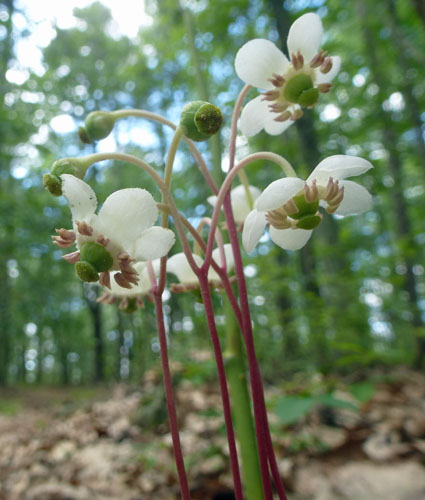
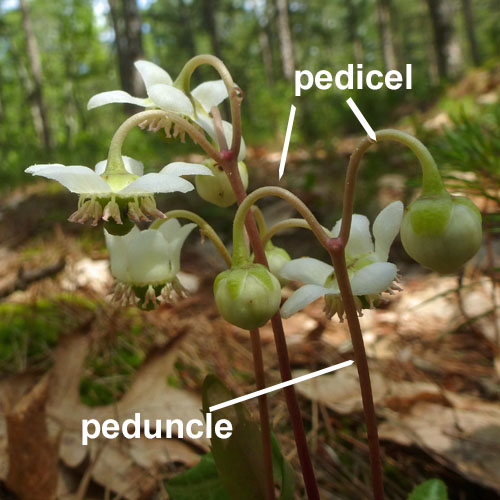
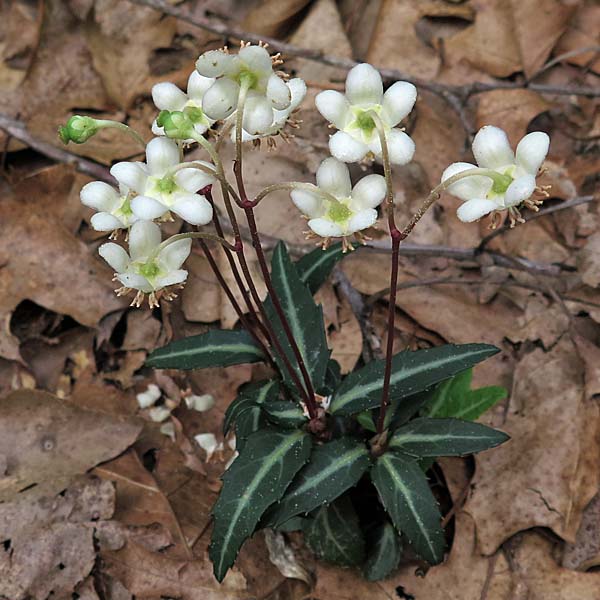
Nodding clusters of 1–5 flowers form at the end of flower stalks.
Individual Flower:
The flower pedicels curve so that the flowers face downward. Each flower is 1/2 to 3/4 inches across. Flowering occurs from late June into August, lasting 2–3 weeks.
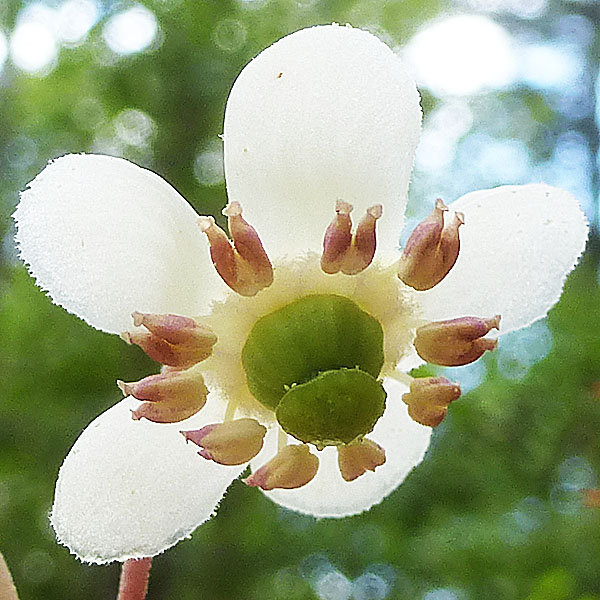
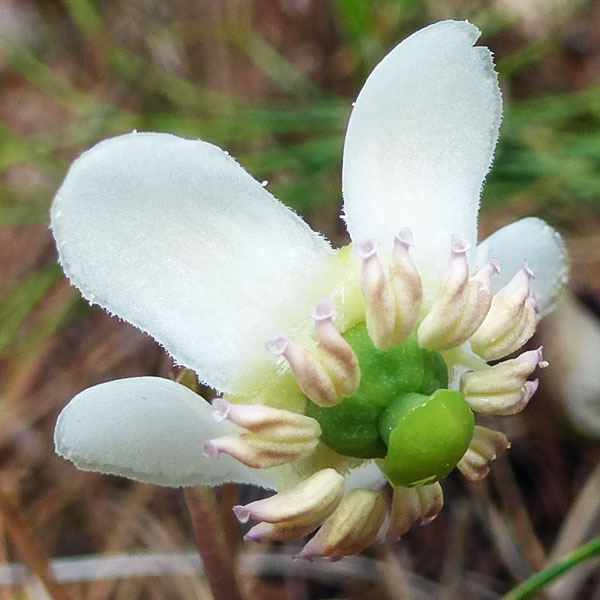
The flower has 5 pale green sepals, 5 white to pinkish petals. The petals have fine fringes and the petals reflex slightly. The petals are waxy.
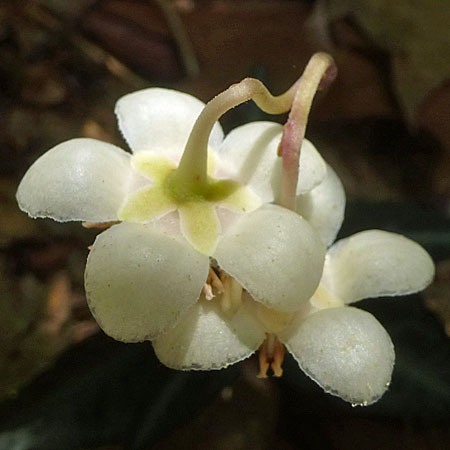
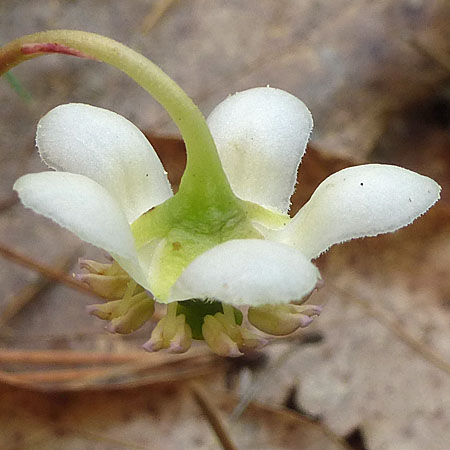
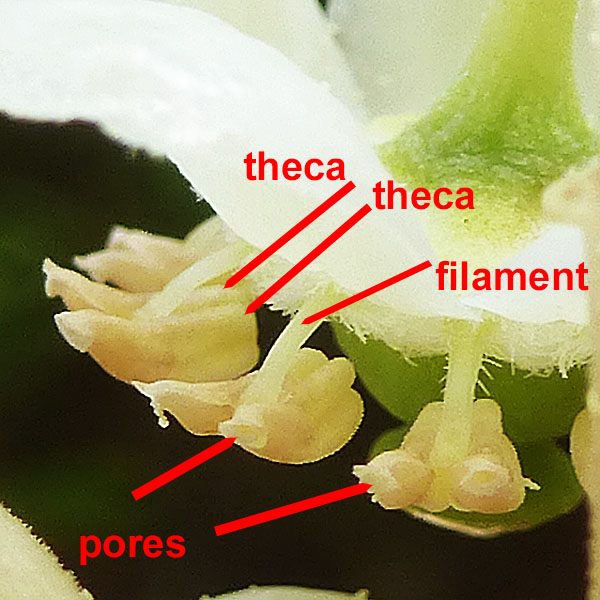
In the flower, most notable is the green pistil with a large round ovary and a knobby stigma on top. At the base of the ovary is a nectary disk. The flower has 10 stamens. Each anther consists of two adjacent thecae (structure that makes and store pollen). Each theca has a pore to release the pollen. Striped wintergreen offers nectar and pollen to its pollinators.
Side view and close up of the anthers. The filaments are actually enlarged and hairy at the base (not shown).
Fruit
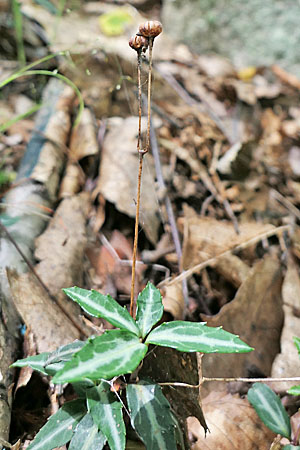
As the flower begins to fruit, the flower pedicel bends upward so that the fruit faces upward. The round seed capsules contain numerous tiny seeds.
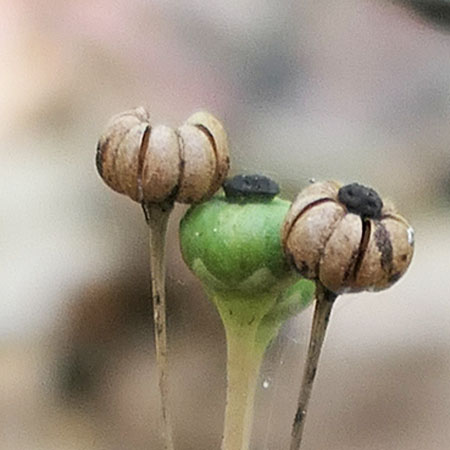
Plant - Leaves - Habitat
Striped wintergreen (Chimaphila maculata) is a small, low-growing, evergreen perennial plant. It is woody at the base so it is considered a subshrub. It spreads by rhizomes to form colonies.
This plant can easily be spotted on the forest floor by the bright stripes on the leaves. The evergreen leaves are heavy, blue-green, coarsely toothed with a bold white mid-rib and white stripes extending from the mid-rib. The leaves are 1–3 in. long and 1/2 –1 in. wide.
The plant does not bloom every year. The flower stalk grows from the top of the leaves. Plants without flowers are 3–5 inches tall while flowering plants reach 6–10 inches.
These plants are found in shaded woodland environments. They can easily be spotted on the florest floor among the leaf litter.
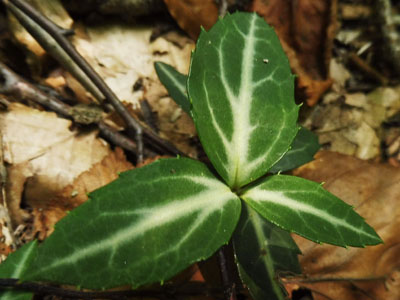
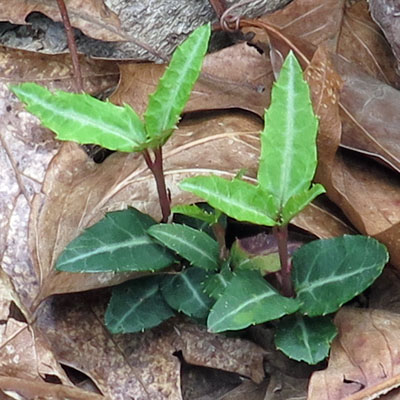
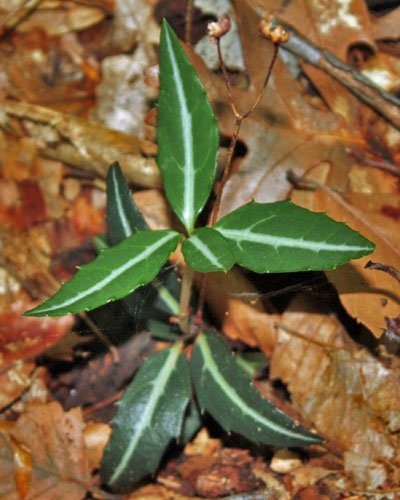
Text by Millie Ling and all photos by Hubert & Millie Ling. Photos: Martha's Pond, Buttermilk Falls Natural Area, Sparta Mountain Preserve.
Additional information
Additional information / references:
- South West Biodiversity
https://swbiodiversity.org/seinet/taxa/index.php?taxon=1010 - Illinois Wildflowers
https://www.illinoiswildflowers.info/woodland/plants/str_wintergreen.html - Brooklyn Botanical Garden: New York Metropolitan Flora
https://nymf.bbg.org/species/323 - The Flower of Chimaphila
https://www.jstor.org/stable/23299646?seq=1