Cardamine diphylla, broadleaf toothwort, is a small native perennial herbaceous plant that lives in the woods and welcomes spring with many white flowers.
Cardamine diphylla was previously Dentaria diphylla Its many common names include crinkleroot, pepper root and two-leaved toothwort.
Flowers
Inflorescence/Flower cluster:
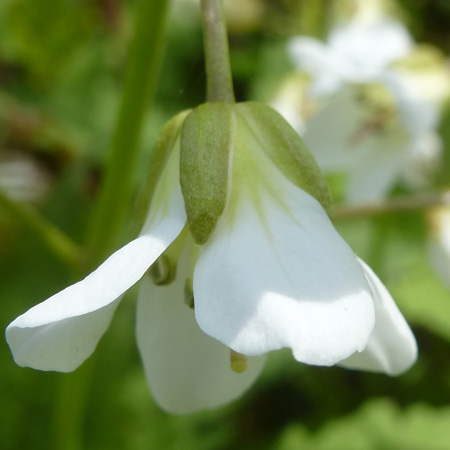
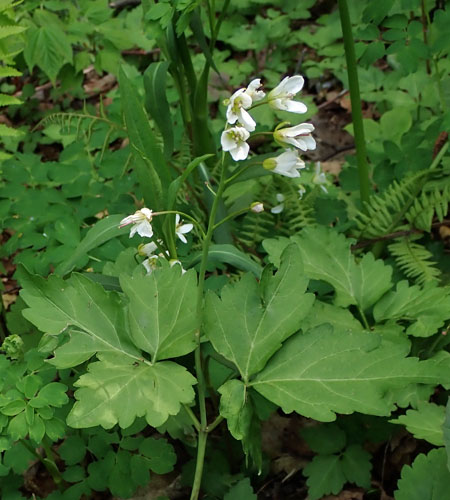
The Cardamine diphylla inflorescence is a crowded flower cluster in a bractless raceme (a single stem with flowers with short stalks and in this case no bracts where the stalks meet the stem) at the top of an unbranched stem. The flowers open from the bottom up so the lower flowers are done first.
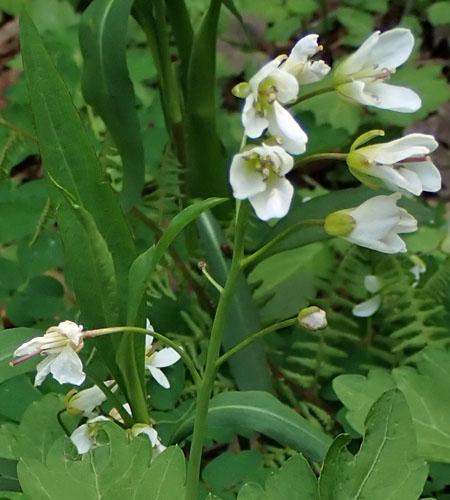
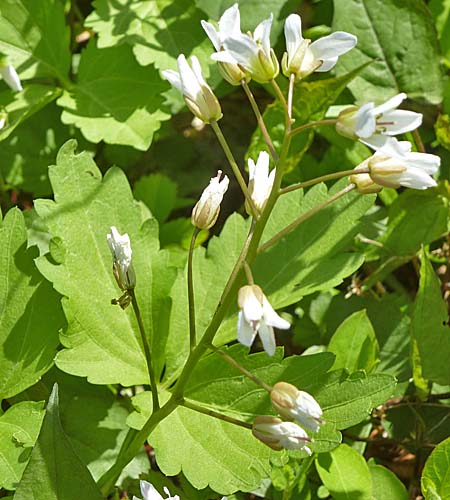
Individual Flower:
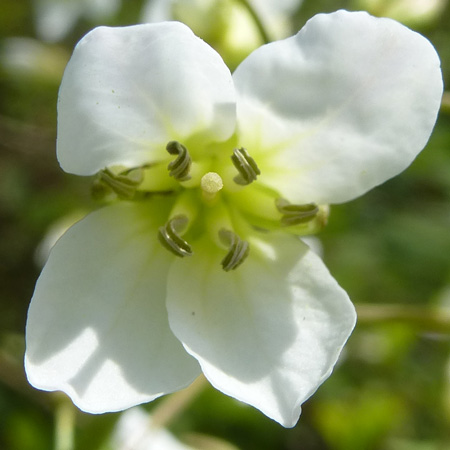
The broadleaf toothwort flowers are white to pale pink and about 3/4 inch long. The flower has 4 sepals and 4 petals. The 4 petals form a cross which is a typical trait of the Brassicaceae (mustard) family. The greenish yellow center has 6 stamens and one pistil with a long slender style.
The flower provides nectar and pollen to its pollinators which are mainly bees.
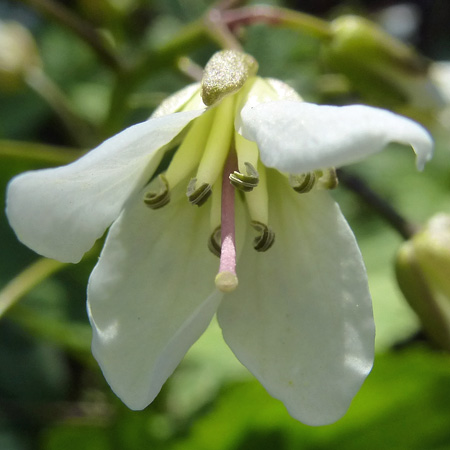
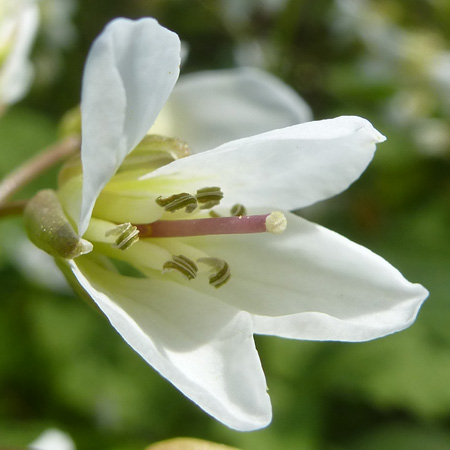
Leaves
There are 4 toothwort species in NJ and the flowers are similar. It is the leaves that help distinguish between the species.
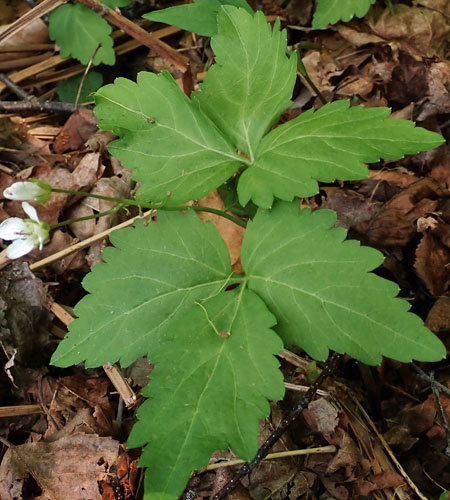
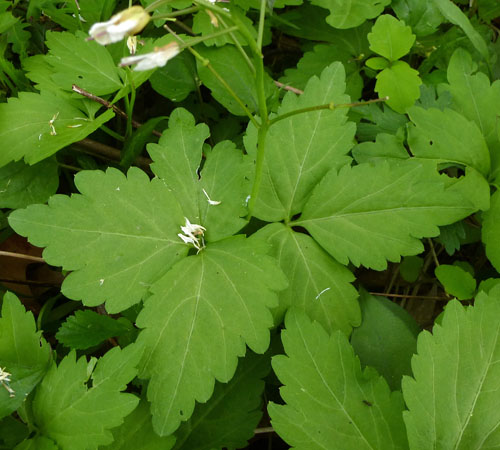
Cardamine diphylla, broadleaf toothwort, has both rhizomal & cauline leaves that are similar in shape.
Rhizomal leaves are leaves that emerge directly from the underground rhizomes (horizontal underground stems). They differ from basal leaves which are leaves that emerge from the base of the flower stem. However, frequently, the rhizomal leaves are called basal leaves. The rhizomal leaves are separate from the flower stems and are not found at the base of the flower stems.
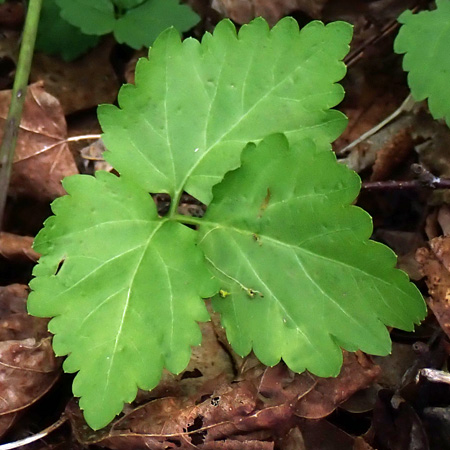
The rhizomal leaves emerge singly on a long petiole (leaf stalk); the leaf blade is about 3 inches long and wide. Each rhizomal leaf is cut palmately into 3 to 5 leaflets with short stalks. The leaflets are wide with margins that have shallow rounded teeth/lobes. The broad leaflets/leaves help distiguish this species from C. concatenata.
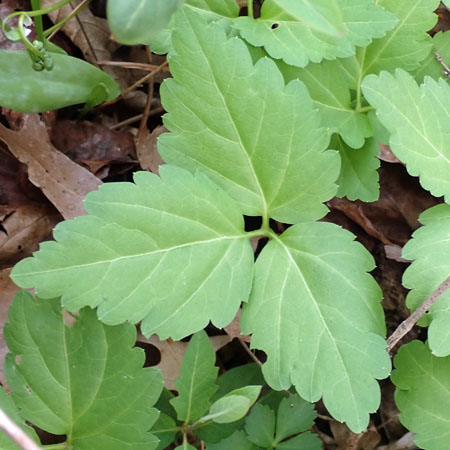
Cauline leaves: Cauline leaves are leaves that grow from the stem and not at the base of the stem. There are 2 opposite/almost opposite cauline leaves below the flowers. These leaves are similar in shape to the rhizomal leaves. The leaves form 3 leaflets. Like the rhizomal leaves, the leaflets are wide with margins with shallow rounded teeth/lobes.
Rhizomes
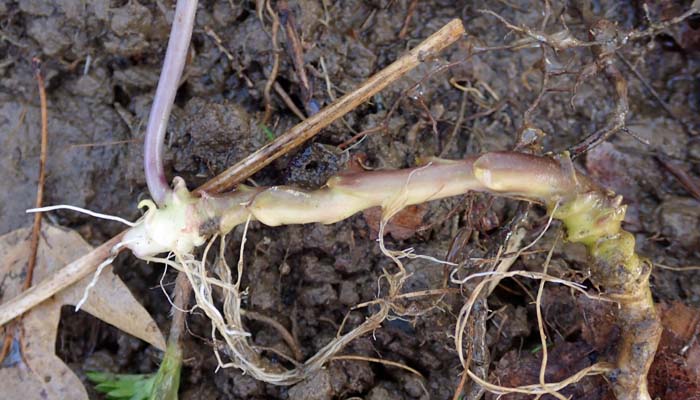
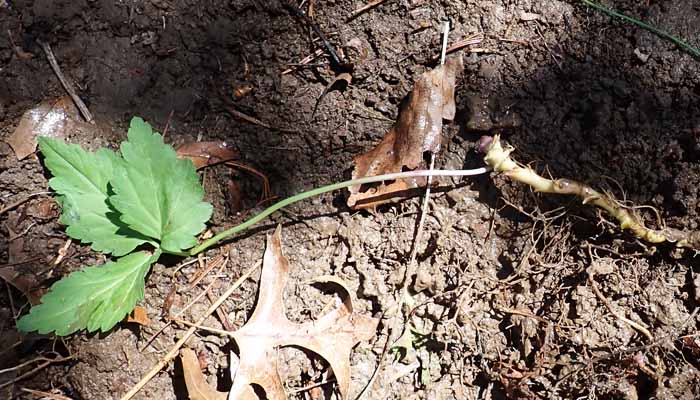
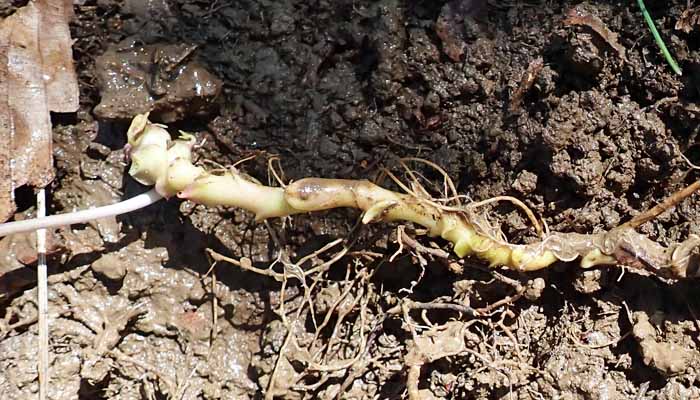
Differences in rhizomes help distinguish between toothwort species, though it is not useful in the field. In Cardamine diphylla, broadleaf toothwort, the rhizones are uniform in thickness, not forming segments. The rhizomes in the photos below are about half an inch thick.
Rhizome with flower stalk: Where the flower stalk meets the rhizome there are no leaf stalks.
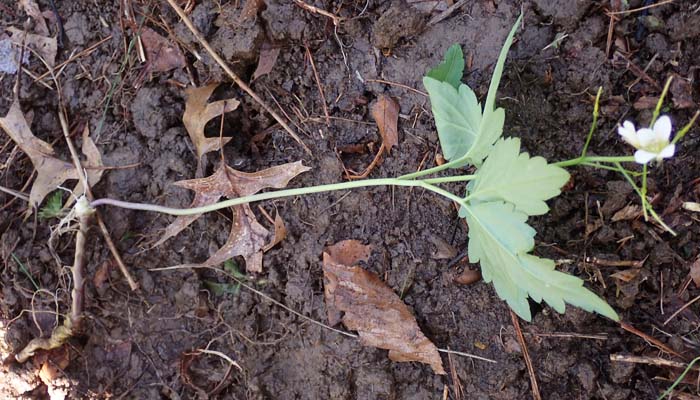
Rhizome with single leaf:
Plant
The plant/flower stem grows to about 14 inches tall. The stem is erect and unbranched.
Underground the plant has rhizomes which are stems that grow horizontally and can send up several shoots and send down roots for a new plant. The plant uses rhizomes for food storage and as a vegetative means of reproduction.
In broadleaf toothwort the rhizomes are long with a uniform diameter and without segments.
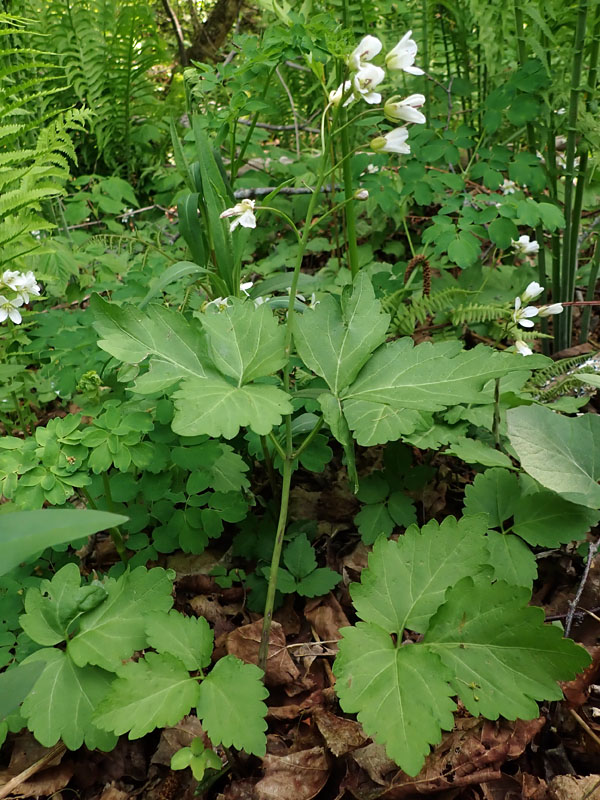
In the photo below, are the rhizomal leaves and the flower stalk with the flowers and 2 cauline leaves.
Rarity: Cardamine diphylla is S2-Imperiled in New Jersey. In iNaturalist, the 24 observations are all obscured (4/2026). It is globally G5- Secure.
Text by Millie Ling and all photos by Hubert & Millie Ling. Photos: April-May, cultivation & Mount Greylock State Reservation, MA.
Additional information
Additional information / references:
- The USDA website shows Cardamine diphylla distribution in the US and other information: https://plants.sc.egov.usda.gov/plant-profile/CADI10
- Flora of North America : eFloras-Broadleaf Toothwort
- GoBotany: https://gobotany.nativeplanttrust.org/species/cardamine/diphylla/
- Plants of the Eloise Butler Wildflower Garden: https://www.friendsofeloisebutler.org/pages/plants/toothwort.html